
What Is The Best Type Of Hanger for Clothes?
The best type of hanger for clothes is the one that supports the garment at the correct points without stretching, slipping, creasing, or concentrating too much weight in one area. There is no single hanger that is ideal for shirts, coats, trousers, lingerie, children’s clothing, and accessories.
Garment construction should guide hanger selection. Weight, shoulder width, fabric friction, neckline shape, storage time, and retail presentation all influence the decision.
Shirts and Lightweight Tops
A standard top hanger with gently curved shoulders works for many shirts, blouses, and lightweight dresses. The hanger should be wide enough to support the shoulder line without extending into the sleeves.
Necklines that slip easily may require shoulder notches, textured surfaces, rubber features, or foam covers. Sharp notches should be avoided on delicate fabric because they may leave impressions.
Slim plastic hangers are useful where high rack density matters, but the body must remain stiff enough for repeated handling.
Suits and Structured Jackets
Suit jackets and tailored garments benefit from wider, shaped shoulder sections. The hanger should support the jacket’s construction rather than allow the shoulder to collapse.
A trouser bar or secure clips can keep matching trousers with the jacket. Buyers should check whether the bar surface prevents sliding and whether the hanger width corresponds to the garment size.
Our plastic suit and coat hangers include several widths and configurations for structured garments.
Coats and Heavy Clothing
Heavy coats require a stronger body, secure hook connection, and sufficient shoulder width. A thin hanger that visibly bends under the coat should not be used for long-term storage.
Look for structural ribs, thicker shoulder sections, and a shape that distributes weight rather than concentrating it around the neck.
The term “heavy duty” should be supported by a defined load requirement and an agreed test method for commercial orders.
Trousers and Skirts
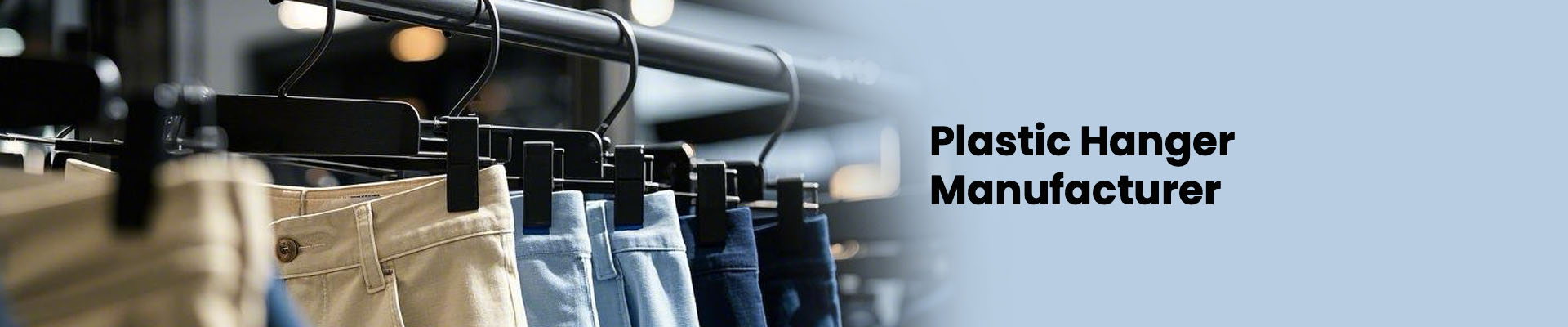
Bottom Hangers may use adjustable clips, fixed clips, push-down clips, or a horizontal bar.
Clips should grip the waistband firmly without cutting, staining, or leaving unacceptable pressure marks. Adjustable designs can accommodate different waist widths and help center the garment.
Bars are useful for folded trousers, but the surface should provide enough friction to prevent gradual sliding.
Dresses
Dress hangers should match both the shoulder structure and overall weight. Garment straps can be held in notches, while heavier dresses require a more rigid body.
Long dresses may also need loop support to reduce the load placed on the shoulders. Test the finished garment because fabric weight can be distributed very differently across dress designs.
Lingerie and Swimwear
Lingerie Hangers are usually smaller and may support several lightweight pieces. Smooth surfaces are essential because lace, elastic, and fine straps can snag easily.
The hanger’s hooks, notches, and contact edges should be checked by hand before use. Retailers may also need space for labels, size markers, or product cards.
Children’s Clothing
Adult hangers are usually too wide for children’s garments. Excessive width can stretch sleeves and distort small shoulders.
Child hangers should follow the relevant garment size range rather than treating all children’s apparel as one category. Tops and bottoms may require separate hanger structures.
Browse our child hanger collection for child top and bottom options.
Shoes, Towels, and Scarves
Special-purpose hangers improve product organization when standard triangular hangers are unsuitable. Shoe hangers use compact holding structures, while rectangular towel or scarf hangers provide an open display area.
Specialized products can improve rack organization, but buyers should confirm how easily store staff can load and unload the item.
The Commercial Buying Checklist
For a wholesale hanger program, evaluate:
Garment category
Garment dimensions and weight
Hanger width and shoulder profile
Hook material and rotation
Clip type and grip
Bar surface
Anti-slip requirements
Logo and size-marker location
Pieces per carton
Carton strength
Rack and packaging-line compatibility
Required quantity by model and color
Testing a hanger without clothing provides limited information. Use actual garments from the intended range and review them after hanging for an appropriate period.
Our Supply Capability
Our factory manufactures Adult Plastic Hangers, child hangers, Top Hangers, bottom hangers, lingerie hangers, shoe hangers, and towel or scarf hangers. We also supply size markers, security tags, foam covers, woven labels, hang tags, elastic tape, ribbons, and garment packaging bags.
For buyers sourcing commercial-grade plastic clothes hangers, we support existing models and suitable customized projects for garment factories, retailers, and distributors. Our manufacturing facilities cover nearly 141,000 square feet and have supported plastic product production since 2001.
Build a Hanger Range Around the Clothes
A retailer rarely needs one hanger for every product. A more effective range may use slim top hangers for shirts, shaped hangers for suits, stronger models for coats, clip hangers for bottoms, and correctly sized hangers for children’s apparel.
Send representative garments, quantities, required colors, hook preferences, and packing information for sample matching. The best hanger is selected from the clothing outward—not from the lowest unit price inward.