
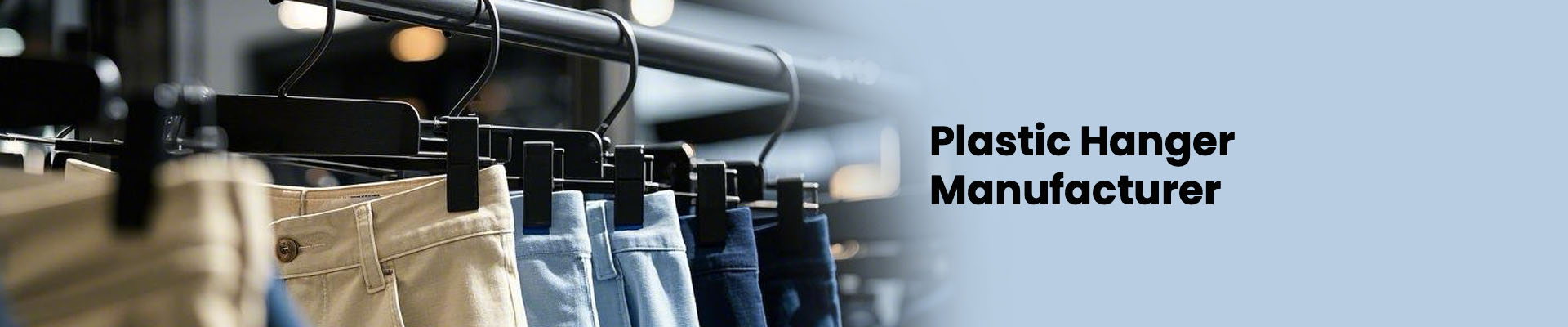
Top Hangers vs. Bottom Hangers: Which Garments Need Each Type?
Top Hangers support garments from the shoulders, while Bottom Hangers secure clothing at the waistband, hem, or folded leg. Shirts, jackets, dresses, blouses, and coats generally use top hangers. Trousers, skirts, shorts, and selected accessories usually require bottom hangers with clips or a support bar.
Using the correct hanger helps preserve garment shape and creates a clearer retail display.
What Is a Top Hanger?
A top hanger has two shoulder arms joined beneath a central hook. Its width and contour should correspond to the garment.
Typical top-hanger applications include:
Shirts
Blouses
Dresses
Jackets
Coats
Suits
Knitwear
Children’s tops
Shoulder notches can retain straps, while a broad contour supports structured jackets. Slim profiles suit lightweight shirts but may not provide enough support for heavy outerwear.
The hanger should end close to the garment’s natural shoulder point. A hanger that is too wide can stretch sleeves or create bumps, while one that is too narrow allows the shoulders to collapse.
What Is a Bottom Hanger?
A bottom hanger supports trousers, skirts, shorts, or other garments without using their shoulder structure. Common designs include adjustable clips, pinch clips, push-down clips, and horizontal bars.
Clips should provide enough holding force without cutting, marking, or distorting the waistband. Rubber or textured contact areas may improve grip on smooth fabrics.
A bar hanger supports folded trousers across a horizontal surface. The bar should be straight, sufficiently rigid, and designed to reduce slippage.
When Is a Combination Hanger Useful?
Suit hangers may combine shoulder support with a lower trouser bar. This allows a jacket and matching trousers to remain together through storage, delivery, or retail display.
Combination hangers save coordination time but must support the combined garment weight. A weak lower bar may bow, while an overly narrow shoulder profile can still distort the jacket.
Size Depends on the Garment Category
Adult top hangers are generally wider than children’s models. Bottom-hanger width depends on waistband dimensions and clip adjustment range.
Our hanger collections include several widths for children’s clothing, adult tops, trousers, skirts, and suits. Selecting one universal size for every garment may simplify purchasing but can reduce presentation quality.
For a mixed apparel program, group garments by:
Adult or child sizing
Top or bottom construction
Garment weight
Shoulder structure
Waistband width
Fabric sensitivity
Retail or transport use
Planning a Coordinated Hanger Program
For top and bottom hanger bulk supply, we can coordinate product size, plastic color, hook finish, clip type, bar structure, Size Markers, branding, and packing across several hanger categories.
Our bottom hangers include adjustable clip designs for trousers, skirts, scarves, and related garments. Top hangers are available with different widths and metal-hook configurations for shirts, dresses, jackets, and suits.
Our production and quality teams inspect hanger dimensions, hook placement, clip action, surface finish, structure, and carton quantity. Matching specifications across repeat batches helps apparel brands maintain a uniform garment presentation.
Which Garment Needs Which Hanger?
Use a top hanger when the garment is designed to hang from its shoulders. Use a bottom hanger when the garment is better secured at its waistband or supported across a bar. Use a combination hanger when two coordinated pieces must remain together.
The hanger should follow the garment’s construction rather than force every item into the same display method.