

Can Plastic Hangers Hold Heavy Winter Coats?
plastic hangers can hold heavy winter coats, but only when the hanger is designed for load-bearing use and matched to the garment’s weight and shoulder structure. Most failures and “shoulder damage” happen because a lightweight, narrow-armed hanger is used for a bulky coat, or because the hook connection and body strength are not engineered for long-term hanging under high load. If you choose the right plastic hanger type, a winter coat can stay properly supported without sagging, warping, or creating permanent shoulder bumps.
This guide explains what makes a plastic hanger strong enough for heavy outerwear, how to choose the right profile for different coat types, how to store winter pieces for months without shape loss, and how to build a consistent hanger system for adults and kids. You can browse Jinshunda’s hanger categories while you compare styles: adult plastic hangers and child hangers.
1. What Counts as a Heavy Winter Coat and Why It Matters
Not all winter coats place the same stress on a hanger. The heavier and bulkier the garment, the more the hanger needs to manage three forces at the same time:
Downward weight that pulls the coat straight down and stresses the hook connection
Outward pressure that spreads the shoulder area and can deform the hanger arms
Long-duration load, because winter coats are often stored hanging for months
Typical “heavy winter coats” include padded jackets, thick wool coats, insulated parkas, and long overcoats. These garments are not just heavier. They also have structured shoulders and thick seams, which means the hanger must match the coat’s shoulder line and distribute pressure across a wide area.
2. The Real Answer: Yes, But Only Certain Plastic Hangers
A well-designed plastic hanger can be reliable for heavy winter coats. The key is not the word plastic, but the hanger’s structural design and manufacturing quality.
Plastic hangers are a good choice for coats when they offer:
A rigid body that does not flex under load
Thick, widened shoulders that spread pressure and protect the coat’s shape
A smooth surface that avoids fabric snagging and abrasion on delicate linings
A secure hook connection that stays stable during repeated use
If you use a thin, lightweight hanger for a heavy coat, it may bend over time. That bending concentrates load at one point, which creates shoulder dents on the garment and can eventually weaken the hanger itself.
3. What Features Make a Plastic Hanger Strong Enough for Coats
When you are selecting plastic hangers for heavy outerwear, focus on load-bearing design cues. These features are the difference between “works for T-shirts” and “safe for winter coats.”
Wide shoulder support
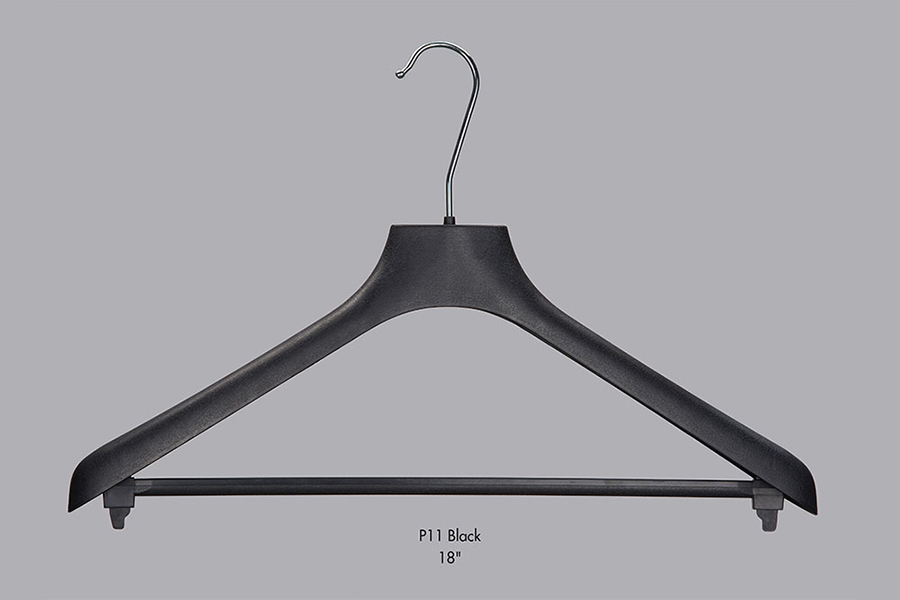
A coat hanger should be wider and more contoured than a basic shirt hanger. Wide shoulders support the coat at the correct seam position, reducing pressure points that cause bumps and collapse.
Thick arms and reinforced geometry
Thicker arms resist bending. Reinforced geometry helps the hanger maintain its shape even when a coat is stored for a long season.
Stable hook insertion and hook strength
The hook connection is a common failure point in low-quality hangers. A properly inserted metal hook and consistent assembly reduce wobble and improve long-term reliability.
Smooth finishing
Winter coats often have delicate linings, face fabrics, and stitched shoulder details. A smooth hanger surface helps prevent snagging, friction wear, and pilling in contact zones.
Jinshunda’s product range includes multiple adult hanger styles, including suit-style hangers with widened shoulders designed to fit garment shoulder lines and improve load-bearing performance for heavier clothing.
4. Picking the Right Hanger for Different Winter Coat Types
The “best” hanger depends on how the coat is built. Use garment structure as your selection rule.
Puffer jackets and down coats
Choose a wide-shoulder hanger that keeps the insulation evenly distributed at the top. Narrow hangers compress filling near the shoulder seam and create shape collapse that looks like dents in the coat’s silhouette.Wool coats and overcoats
Choose a suit-style wide hanger with strong rigidity. Wool coats often rely on structure at the shoulder and chest, so a narrow hanger can deform the shoulder line and change the way the coat hangs when worn.Parkas with heavy lining
Choose a reinforced hanger that resists flex and keeps the collar and hood area stable. The hood adds leverage that increases stress on the hanger arms.Short jackets and bombers
You can use a slightly smaller but still rigid adult hanger, as long as it matches the shoulder width and does not sit inside the seam line.
A simple matching table helps you standardize selection:
| Coat type | Recommended hanger profile | Main benefit |
|---|---|---|
| Down coat, puffer | Wide, contoured shoulders | Prevents shoulder dents and insulation compression |
| Wool coat, overcoat | Suit-style, rigid, wide shoulder | Preserves structured shoulder line |
| Parka with hood | Reinforced arms + stable hook | Reduces long-term sag and rotation |
| Short winter jacket | Rigid adult hanger, correct width | Maintains shape without excessive bulk |
For most wardrobes, the easiest system is to keep a dedicated set of coat-rated hangers for winter outerwear and use lighter hangers for everyday tops.
5. Adult vs Child Hangers: Why Size Matters Even for Jackets
For kids’ winter coats, the most common mistake is hanging them on adult hangers. Oversized hangers push fabric outward beyond the shoulder seam, causing distortion even if the hanger itself is strong.
Use these principles:
Choose child hangers that match shoulder width
When hanger width matches the garment, the coat is supported where it is designed to carry weight.Avoid wide adult shoulders for small garments
A wide hanger can create unnatural folds and stress points at the sleeve cap area.
Jinshunda provides both adult and child hanger size ranges, with plastic hanger sizing spanning from 8 to 19 inches, and typical categories separating child sizes and adult sizes for more accurate fit. This helps reduce shoulder deformation caused by wrong sizing and makes closet organization more consistent.
If you are setting up a family wardrobe, build two separate zones: a coat-rated adult section using adult plastic hangers and a properly scaled kids section using child hangers.
6. Storage Habits That Keep Heavy Coats Looking New
Even a strong hanger can’t fully protect a coat if storage conditions apply constant stress in the wrong way. These habits are simple but have the biggest impact on long-term shape.
Do not hang coats when they are wet or damp
Fabric stretches more when wet, and the extra water weight increases load on the hanger arms and hook connection.Leave enough space between garments
Tight compression crushes insulation and creates shoulder creases. Space also reduces friction wear on sleeves and side panels.Zip or button coats before hanging
This keeps the garment’s weight distribution balanced, especially for long coats.Use coat-rated hangers for long-term seasonal storage
Seasonal storage often means months of uninterrupted load, so a dedicated set of sturdier hangers is more reliable than rotating lightweight hangers.Avoid sharp edges and rough surfaces
Linings and delicate face fabrics can snag. Smooth hanger finishing reduces damage risk in shoulder and collar areas.
7. Why Manufacturing Quality Creates Big Differences in Hanger Strength
Two plastic hangers can look similar in photos and behave very differently in real use. The difference often comes down to production quality and process control.
Key manufacturing factors that influence coat-holding performance include:
Injection molding consistency
Stable molding reduces weak points and prevents thin zones that bend or crack under load.Hook insertion accuracy and stability
A precise hook insertion process reduces looseness at the hook joint and improves durability during repeated use.Quality inspection before packing
Checking for deformation, bubbles, flashing, and dimensional issues helps prevent weak hangers entering circulation.Protective packaging for shipment
Proper packing reduces warping and edge damage during transport, which matters because a slightly deformed hanger can create pressure points that mark a coat.
A production flow that includes injection molding, systematic inspection, automated hook insertion, and protective packaging helps ensure hangers remain consistent across large orders and long-term usage scenarios.
Conclusion
Plastic hangers are not automatically unsuitable for heavy winter coats. The deciding factors are shoulder width, arm thickness, rigidity, and hook stability, combined with storage habits like spacing and avoiding damp hanging. For structured wool coats, parkas, and down jackets, wide-shoulder, reinforced adult hangers are the safest choice because they distribute pressure and preserve the garment’s silhouette through long seasonal storage.
If you want a consistent closet system, separate hangers by use: coat-rated hangers for winter outerwear, standard adult hangers for everyday clothing, and correctly sized child hangers for kids’ jackets and uniforms. This approach reduces shoulder dents, improves garment presentation, and lowers the chance of hanger bending over time.