
What Hook Strength Problems Affect Flat Coat Hangers In Retail Use?
In retail stores, a hanger is handled much more often than it is in a household wardrobe. Staff take garments down, return them to rails, move stock between display areas, prepare fitting-room returns, and rearrange seasonal collections every day. If the hook area becomes loose, bent, or difficult to rotate, the problem spreads quickly across the whole display.
For apparel retailers, hanger importers, garment distributors, and clothing display suppliers, flat coat hangers should be judged by daily rack performance, not only by shape or unit price. A weak hook can turn a clean display into a messy rail, increase staff workload, and create complaints from stores that expect hangers to last through repeated use.
A Retail Hanger Fails First At The Top
The Hook Takes The Most Repeated Movement
The hook is the part that touches rails, display bars, stockroom racks, fitting-room rails, and transport trolleys. Even when the hanger body looks fine, the hook may start to loosen or deform after repeated lifting and turning.
In retail use, this creates several visible problems:
Garments do not face the same direction
Hangers slide unevenly on the rail
Staff spend more time straightening displays
Heavy coats may pull the hook out of shape
Customers may feel the rack looks poorly managed
For stores, the issue is not only hanger damage. It affects the way the whole clothing area looks.
Rotation Should Be Smooth But Not Loose
Some retail hangers need a rotating hook so garments can face forward quickly. But if the hook turns too freely or becomes loose, garments may twist on the rack and make the display look uneven.
A good hook should allow practical handling without feeling unstable. Retail buyers should test hook rotation, pull resistance, and repeated movement before confirming bulk orders.
Why Flat Hanger Design Needs Better Hook Support
Thin Profiles Save Space But Still Need Strength
Flat hanger bodies help stores place more garments on one rail. This is useful for boutiques, fashion chains, showroom displays, hotel wardrobes, and garment packing. But when the hanger is thinner, the hook and shoulder connection become more important.
If the top connection is weak, the hanger may save space at first but fail faster during daily use.
Heavy Garments Expose Weak Points
Coats, jackets, uniforms, knitwear, and layered outfits place more pressure on the hook area than light shirts. Retailers that sell mixed apparel categories should not choose hangers only by appearance.
Before stocking flat coat hangers, buyers should check whether the hook, body, shoulder line, and material thickness can handle the actual garments sold in the store.
What Buyers Should Test Before Bulk Orders
Hanging Load
A load test should reflect real store use. The hanger should hold heavier garments without permanent hook deformation or body distortion.
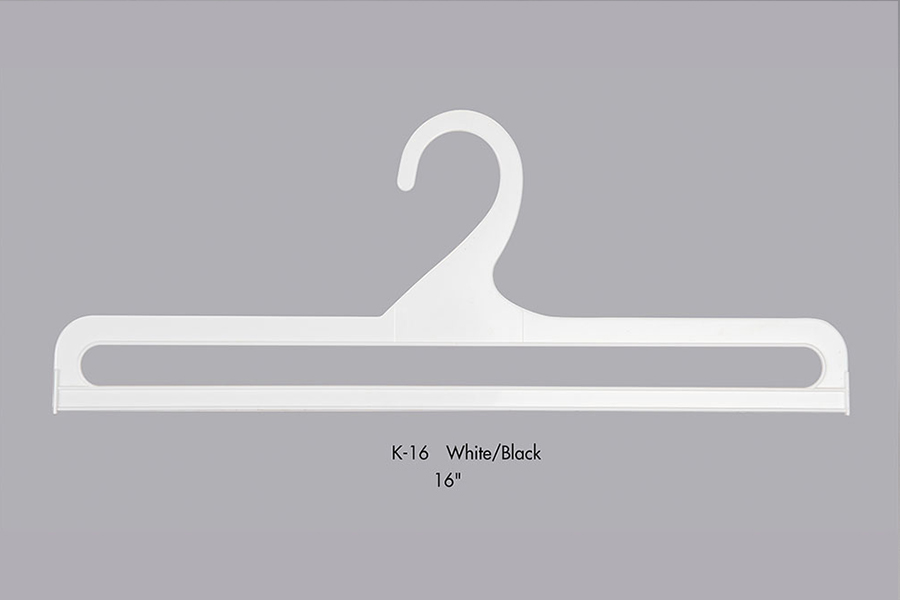
The related 16-inch rectangular plastic hanger uses PP material and is tested with a 3kg hanging load for 24 hours without permanent deformation. This type of test direction is useful for buyers comparing plastic hanger strength before larger orders.
Repeated Handling
Retail hangers are not used once. Buyers should test repeated hanging, removal, sliding, and repositioning. The hook should not loosen after short-cycle testing.
Surface Smoothness
A strong hanger still fails the store experience if it scratches garments. Smooth edges and clean surface finishing help reduce fabric snags during quick retail handling.
For scarves, towels, coats, shirts, and delicate apparel, this point directly affects customer-facing display quality.
How Hook Problems Affect Store Operations
Display Rails Become Messy Faster
When hooks twist or bend, garments no longer align neatly. Staff then need to adjust the rack more often. In busy stores, this can turn into daily labor waste.
For apparel chains, consistency across hundreds or thousands of hangers matters more than one perfect sample.
Damaged Hangers Hurt Brand Presentation
A broken or bent hanger makes even good garments look poorly managed. Retail buyers often notice this during store inspections, showroom visits, and seasonal display updates.
This is especially important for brands using black, white, clear, or custom-color hangers as part of their visual merchandising.
Replacement Cost Builds Quietly
A few broken hangers may look like a small issue, but repeated replacement across stores becomes a real cost. The buyer pays not only for new hangers, but also for sorting, repacking, store communication, and display correction.
How Retail Buyers Can Reduce Hook Complaints
Match Hanger Type With Garment Weight
Light shirts, scarves, towels, jackets, coats, and uniforms should not all be tested the same way. Buyers should define the garment category before choosing hanger structure.
Keep Hook And Body Quality Consistent
Bulk orders should be checked for hook angle, body flatness, surface finish, color consistency, and packaging protection. One weak batch can create complaints across several stores.
Review Packaging For Export Orders
plastic hangers may rub, press, or deform during transport if packing is too loose or cartons are overloaded. Export buyers should confirm carton strength, inner arrangement, and surface protection before shipment.
Before The Next Retail Hanger Order
Retail hanger quality is decided by many small details: hook strength, rotation stability, body thickness, surface smoothness, garment support, and packing condition. For apparel retailers and wholesalers, flat coat hangers should keep garments aligned, protect the display, and reduce store-level complaints after repeated use.
For your next hanger sourcing plan, prepare the garment type, expected load, hook style, color requirement, packing method, quantity plan, and target retail channel. Our team can help review hanger options for apparel display, hotel wardrobe supply, scarf and towel hanging, and garment packaging needs.
To learn more about our hanger supply options, please visit our official website: https://www.jsdhanger.com/